Показаны сообщения с ярлыком chinese painting. Показать все сообщения

среда, 10 октября 2012 г.


A New Way to Interact with Reality


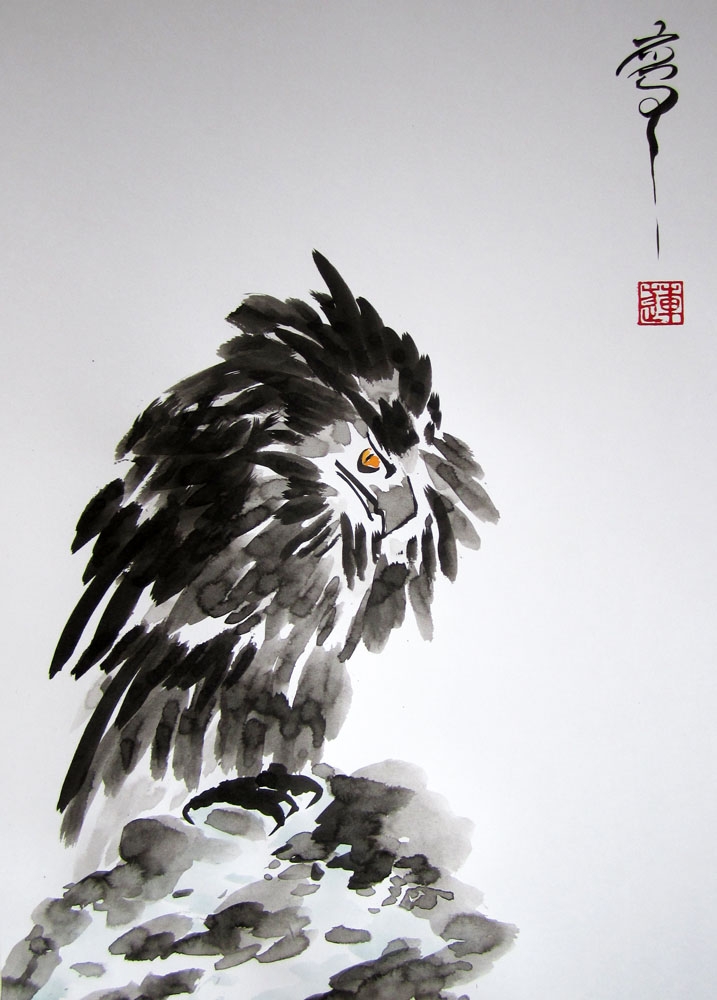
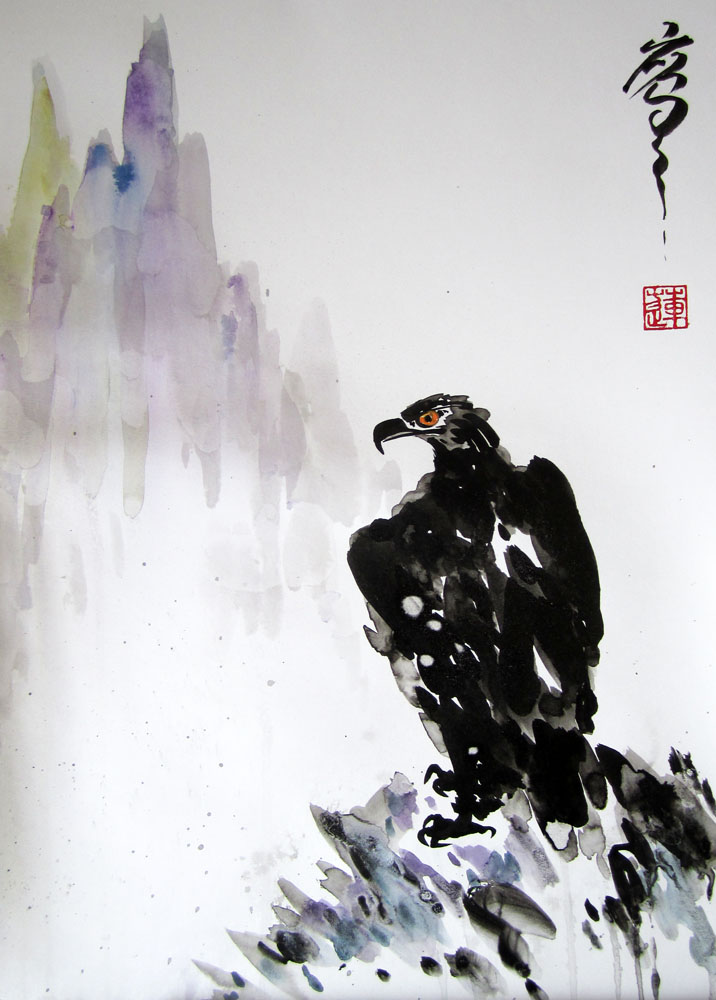
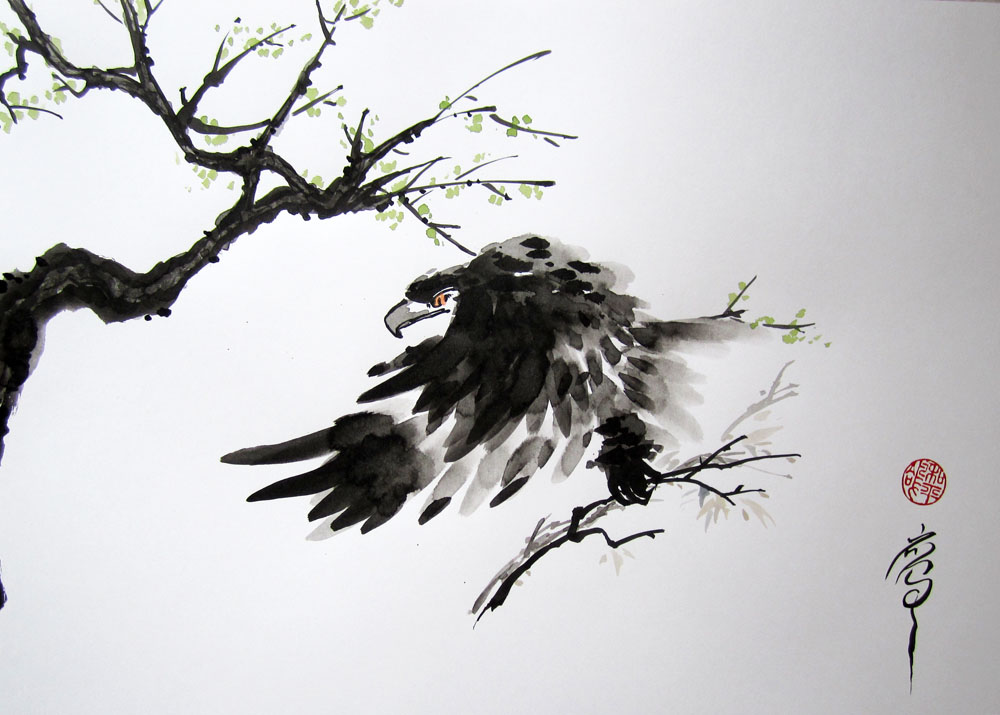
The art of calligraphy in Japan is called “Sodo,” which translates as “The Path of the Letter.” For me Wŭ Xíng painting is the “path of the brush and paint,” “the path of the painting;” “the path of drawing.”
It wasn’t that long ago that I received the gift of Wŭ Xíng from my teacher, but even over the last five years painting has changed me dramatically. I understood from the start that Wŭ Xíng was more than just painting, and couldn’t even imagine how deep and rich of a practice it was. I’m not afraid to call Wŭ Xíng a unique method of spiritual and psychophysical development.

понедельник, 25 июня 2012 г.
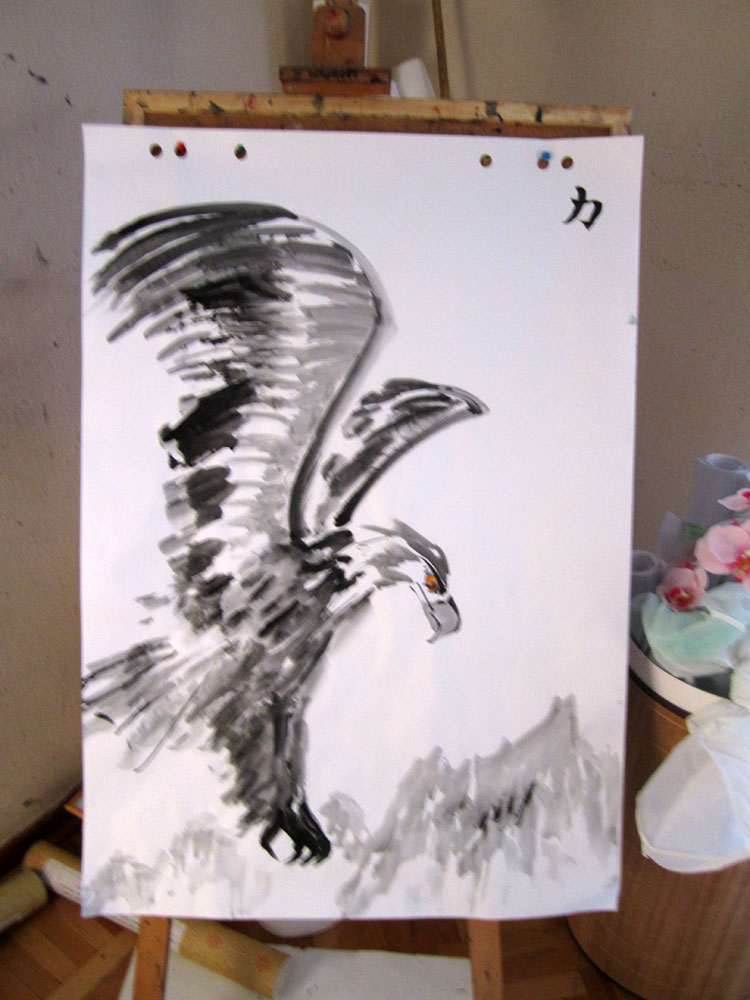
Chinese artists: Xu Beihong

Xu Beihong (徐悲鴻, 1895-1953) was primarily known for his Shui-mo Hua (Chinese ink-and-wash painting) of horses and birds and one of the first Chinese artists to articulate the need for artistic expressions that reflected a new modern China at the beginning of the 20th century. He was also regarded as one of the first to create monumental oil paintings with epic Chinese themes - a show of his high proficiency in an essential Western art technique.
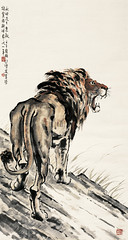
Xu Beihong: Lion       Xu began studying classic Chinese works and calligraphy with his father Xu Dazhang when he was six, and Chinese painting when he was nine. In 1915, he moved to Shanghai, where he made a living off commercial and private work. He traveled to Tokyo in 1917 to study arts. When he returned to China, he began to teach at Peking University's School of Art at the invitation of Cai Yuanpei (蔡元培). Beginning in 1919, Xu studied overseas in Paris at the École Nationale Supérieure des Beaux-Arts, where he studied oil painting and drawing. His travels around Western Europe allowed him to observe and imitate Western art techniques. He came back to China in 1927 and, from 1927 to 1929, gained a number of posts at institutions in China, including teaching at National Central University (now Nanjing University) in the former capital city Nanjing.
       In 1933, Xu organized an exhibition of modern Chinese painting that traveled to France, Germany, Belgium, Italy and the Soviet Union. During World War II, Xu traveled to Southeast Asia, holding exhibitions in Singapore and India. All the proceeds from these exhibitions went to Chinese people who were suffering as a result of the war.
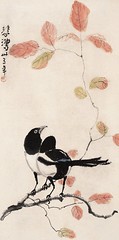
Xu Beihong: Magpie       Xu enjoyed massive support from art collectors across Asia. Between 1939 and 1941, he held solo exhibitions in Singapore, India and Malaysia (Penang, Kuala Lumpur and Ipoh) to help raise funds for the war relief effort in China. During an exhibition in March 1939, Xu held a group exhibition with Chinese painting masters Ren Bonian (任伯年) and Qi Baishi (齊白石), and showcased 171 works of art at the Victoria Memorial Hall.
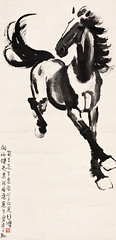
Xu Beihong: Galloping Horse       After the founding of the People's Republic of China in 1949, Xu became president of the Central Academy of Fine Arts and chairman of the Chinese Artists' Association. Xu is probably the one most responsible for the direction taken in the modern Chinese Art world.
       Xu Beihong was a master of both Chinese ink and oil. Most of his works, however, were in the Chinese traditional style. In his efforts to create a new form of national art, he combined Chinese brush and ink techniques with Western perspective and methods of composition. He integrated firm and bold brush strokes with the precise delineation of form. As an art teacher, he advocated the subordination of technique to artistic conception and emphasizes the importance of the artist's experiences in life. 
 Xu died of a stroke in 1953. After his death, a Xu Beihong Museum was established at his house in Beijing.

Original material is here

понедельник, 21 мая 2012 г.

Qi Baishi - great chinese artist

Qi Baishi (齊白石, 1864-1957) was one of the most well-known contemporary Chinese painters. His original name is Qi Huang (齊璜) and style name Weiqing (渭清). Baishi ("white stone") is one of his pseudonyms. Some of Qi's major influences include the Ming Dynasty artist Xu Wei (徐渭) and the early Qing Dynasty painter Zhu Da (朱耷, 即"八大山人")The subjects of his paintings include almost everything, commonly animals, scenery, figures, vegetables, and so on. In his later years, many of his works depict mice, shrimps, or birds. Qi Baishi is particularly known for painting shrimps.

Qi Baishi portrait
       Born to a peasant from Xiangtan (湘潭), Hunan, Qi became a carpenter at fourteen, and it was largely through his own efforts that he became adept at the arts of poetry, calligraphy, painting, and seal-carving. In his forties, Qi Baishi began traveling and looking for more inspiration. He came upon the Shanghai School, which was very popular at the time, and met Wu Changshuo (吳昌碩) who then became another mentor to him and inspired a lot of his works. Another influence of Qi Baishi came about fifteen years later, as Qi became close to Chen Shizeng (陳師曾) after he settled down in Beijing.
       Qi Baishi theorized that "paintings must be something between likeness and unlikeness." His prodigious output reflects a diversity of interests and experience, generally focusing on the smaller things of the world rather than the large landscape. Shrimp, fish, crabs, frogs, insects, and peaches were his favorite subjects. Using heavy ink, bright colors, and vigorous strokes, he created works of a fresh and lively manner that expressed his love of nature and life.
       In 1953 Qi Baishi was elected to the president of the Association of Chinese Artists. He was active to the end of his long life and served briefly as the honorary president of the Beijing Academy of Chinese Painting, which was founded in May, 1957. He died in Beijing on September 16, 1957.


воскресенье, 29 апреля 2012 г.

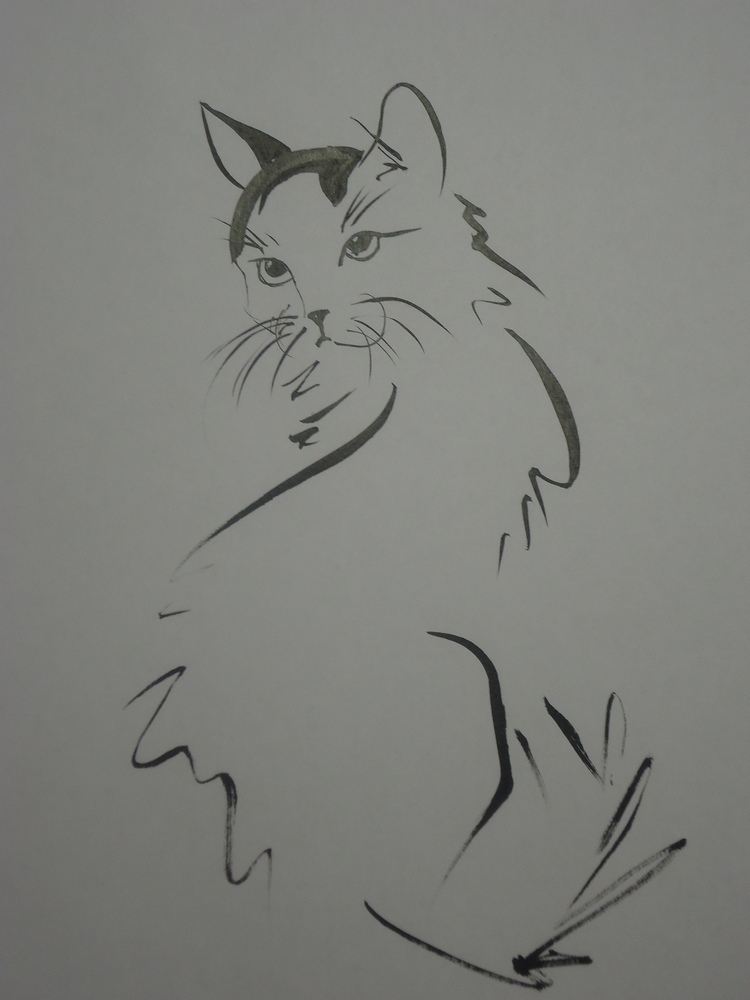
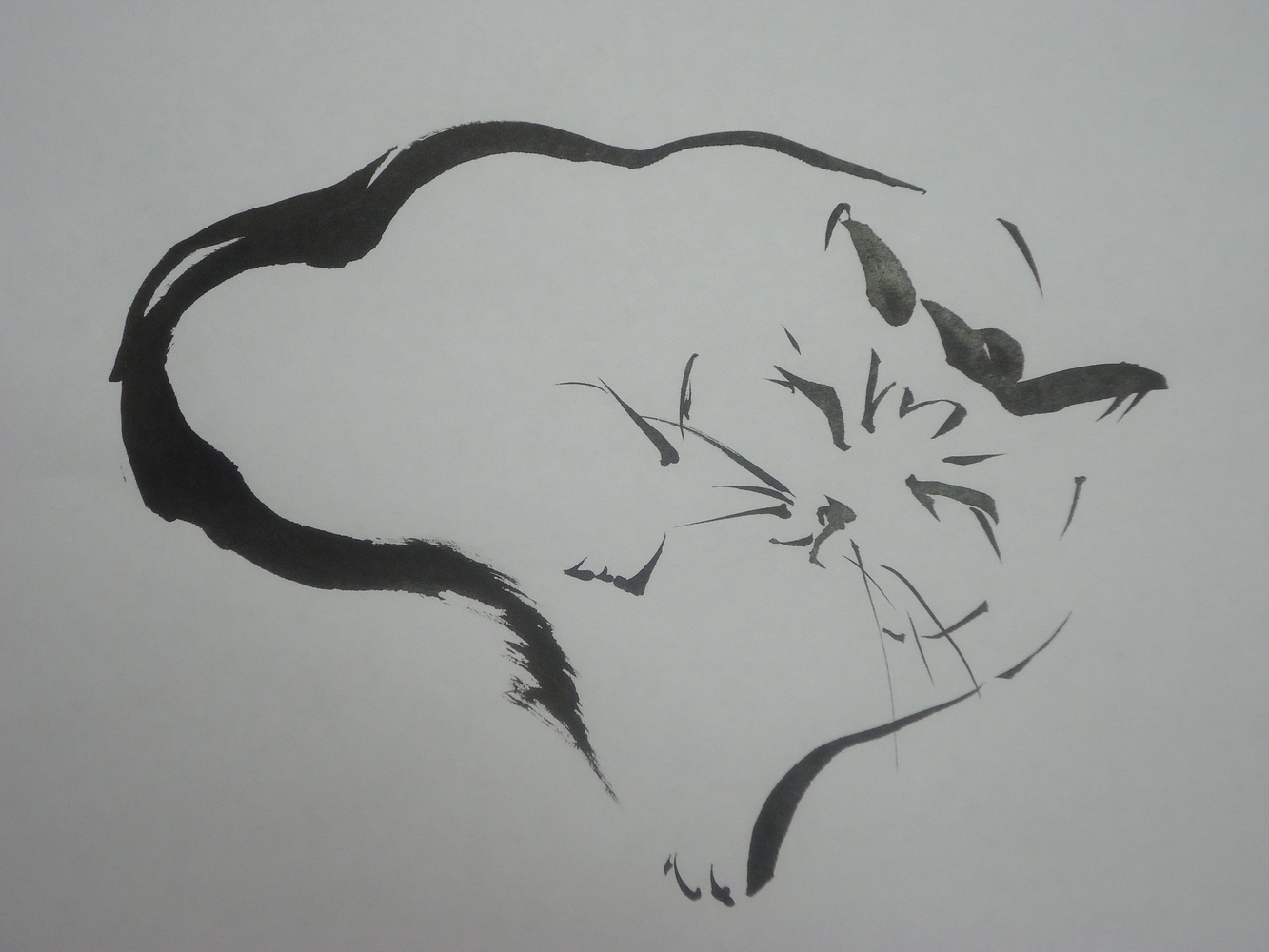
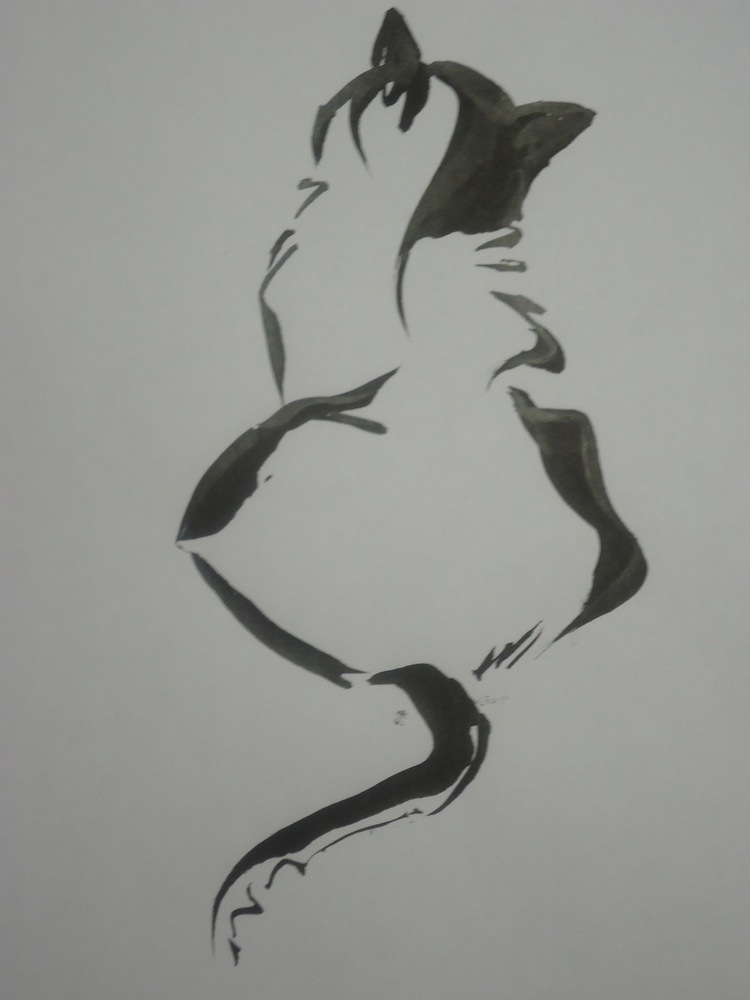
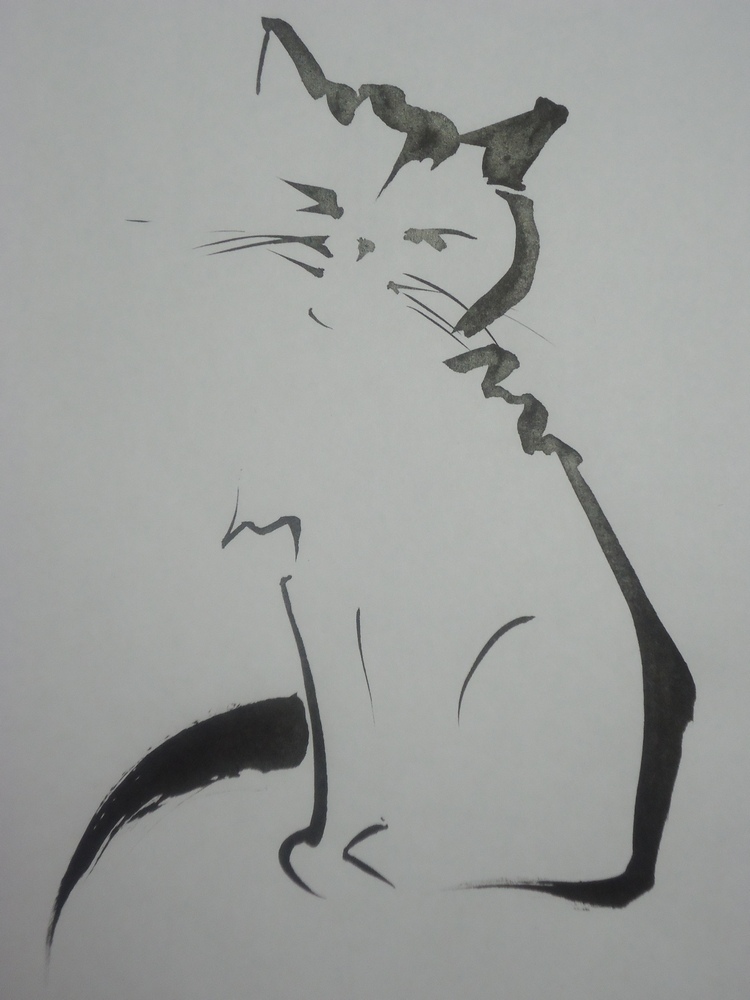
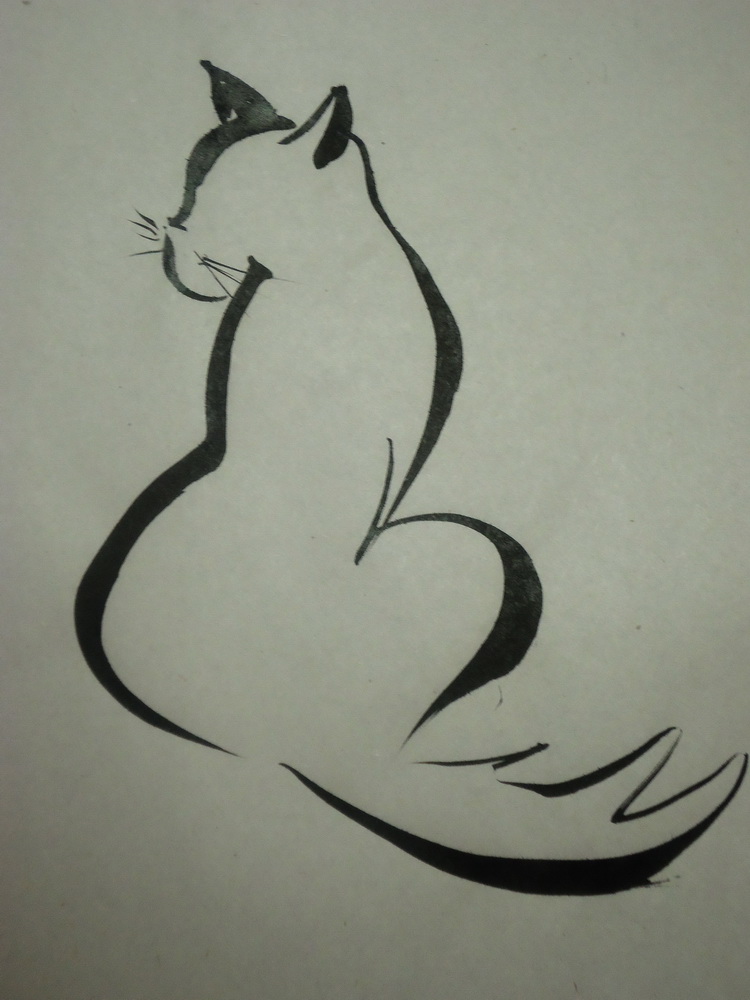
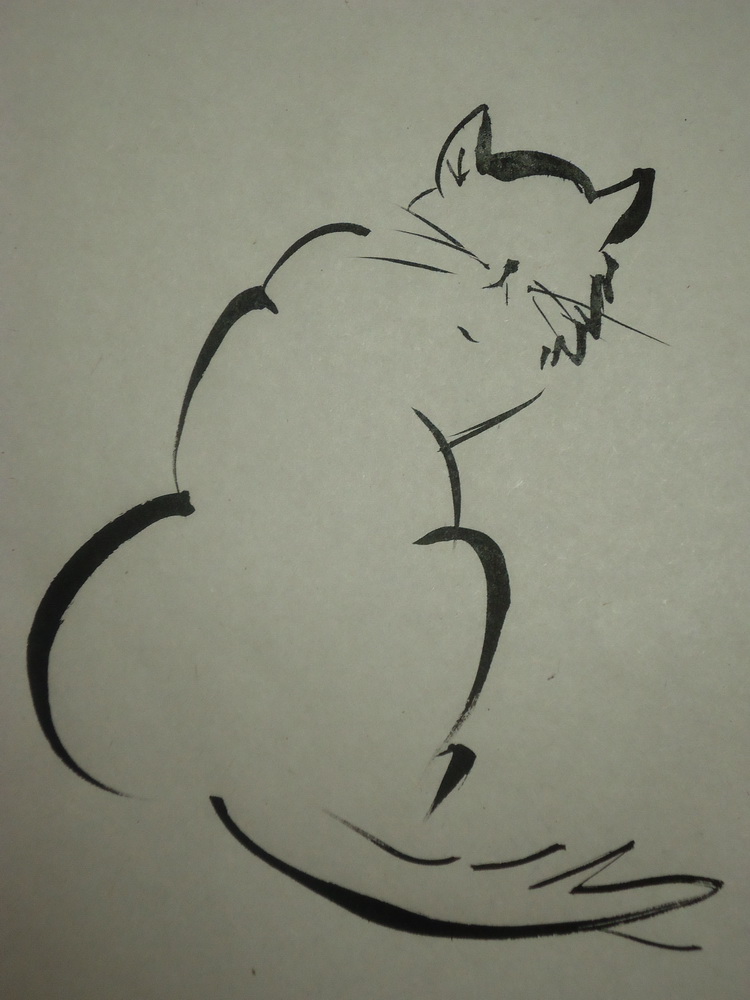
Chinese painting: cats

Author: Nataly Kotova, artist and teacher of Wu Xing painting

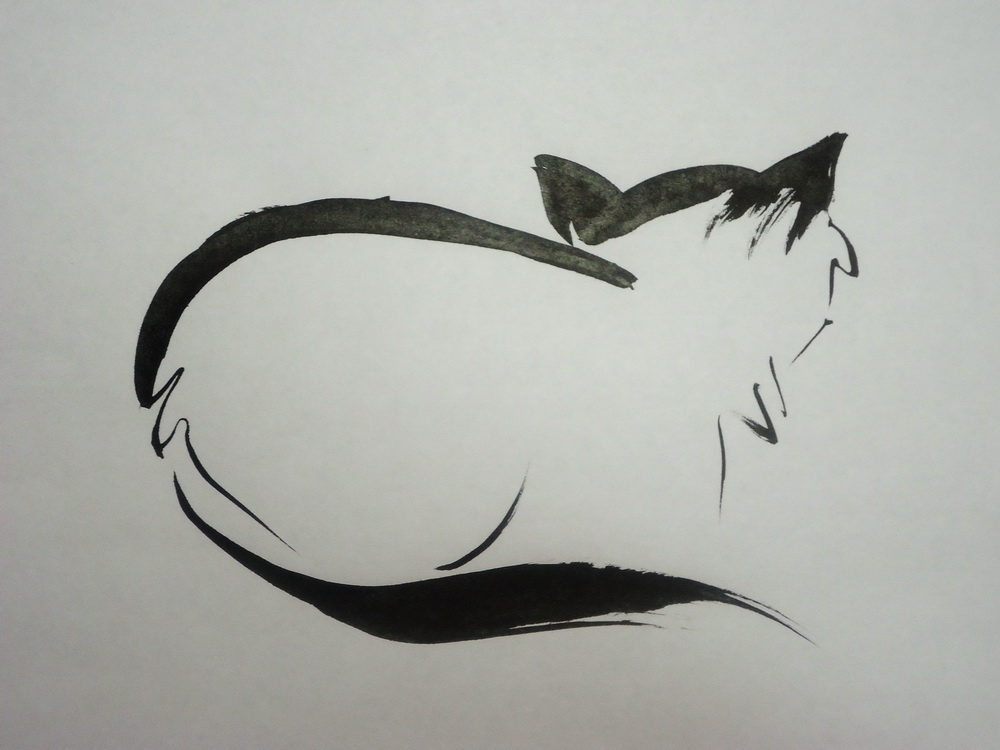
Since painting appeared in China there was invented a style called "sketch of lines". Ancient Chinese philosophers, scientists and poets made sketches with 2-3 lines which were supposed to reveal "the spirit of alive movement". These lines have a nature of Metal energy. As only Metal brushstroke can change from wide line into thin one, can be long or sharp. 
I tried to paint cats in this style, this animal is flexible, the right sense for the Metal brushstroke. 


Painting in this style you don't have to picture every part of the animal, you can forget one leg or eyes. The main idea is to feel and show the main line of movement in this or that pose. 
                   

понедельник, 9 апреля 2012 г.

Four gentlemen in Chinese painting


4 gentlemen or noble plants: orchid, bamboo, chrysanthemum and cherry plum in Chinese painting are the most common themes for pictures as each of them has its own symbol and sense.  
Let's see how they look like in real nature: 


Orchid is gentle and sophisticated, it represents early spring, the idea of purity, simplicity and nobility. 
The leaves are painted with metal brushstroke and the flowers with fire brushstroke. 


Pictures of Katerina Chernaya (don't forget to click on the pictures to see the larger image)


Picture of Ruslan Omeliyanenko

Bamboo is a symbol of strong character, real man with high moral values. I've written about bamboo in this blog earlier http://wuxingpainting.blogspot.com/2012/02/main-themes-of-chinese-and-wu-xing.html
Among 4 gentlemen bamboo is associated with summer. For its painting movements of Wood and Fire are used.
Picture of Katerina Chernaya

Chrysanthemum is beautiful, virgin and shy, it symbolises autumn. This flower is a symbol of high-minded solitude and calmness. In Wu Xing painting there are many ways to draw this flower. 


Pictures of Elena Kasiyanenko

Wild cherry plum is associated with purity of thoughts and life troubles resilience. As this plant can preserve its juice even in severe frosts real gentleman should be able to preserve calmness and harmony inside even when life is tough.  On the North of China wild cherry plum is often blossoming under the snow. It is often associated with winter time. 


Picture of Ruslan Omeliyanenko                                                            Picture of Diana Medvedeva